Independent · non-commercial · evidence on tooth regeneration

Can humans grow a third set of teeth?

Human dentition normally stops after the baby teeth and the permanent teeth. Several research programs claim it does not have to. Third Teeth tracks what those claims are based on: what was actually measured, in which model, and as of what date.

Read the current pass Program tracker

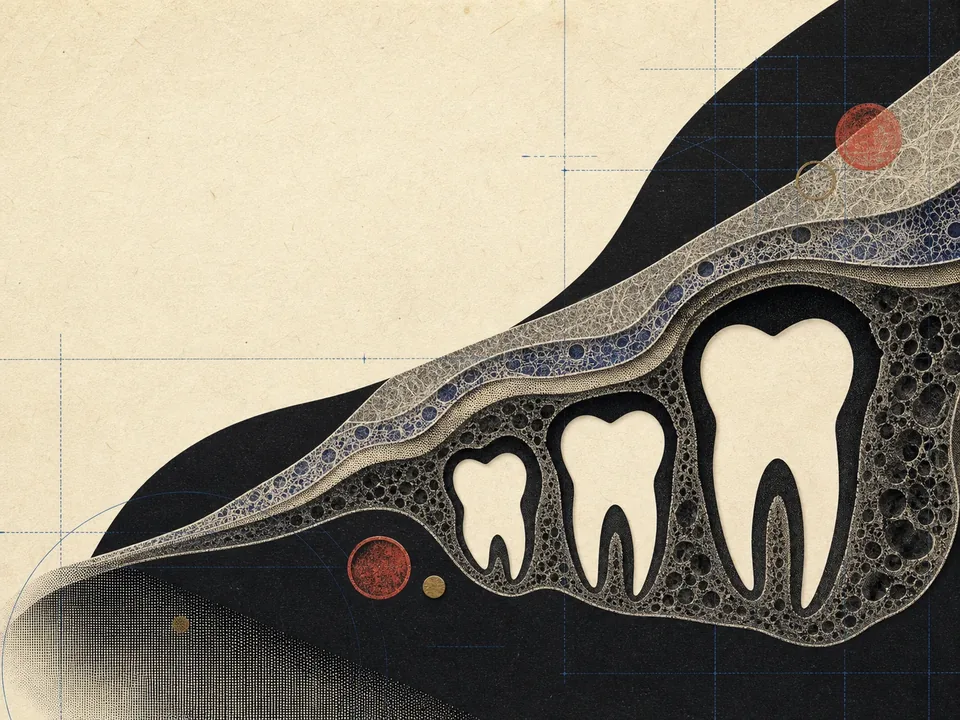
Screenprint triptych of three human teeth rendered as negative space against heavy grain, the third tooth cut from the paper's edge
Fig. 01A third dentition is plausible in development. Nothing has shown one in a person yet.
State of the fieldpass 1

Ledger

Latest dated entries

  1. 2009-08-03

    Functional bioengineered tooth replacement in an adult mouse

    bioengineered-tooth-germ T2 · Animal result
  2. 2021-02-12

    Anti-USAG-1 antibody rescues tooth agenesis in mouse models (Science Advances)

    anti-usag-1-trg035 T2 · Animal result
  3. 2024-05-03

    Phase I first-in-human study of TRG-035 announced and registered (Kitano Hospital)

    anti-usag-1-trg035 T3 · Small or narrow human data

Open the full ledger →

Plate I

What it actually takes to build a tooth

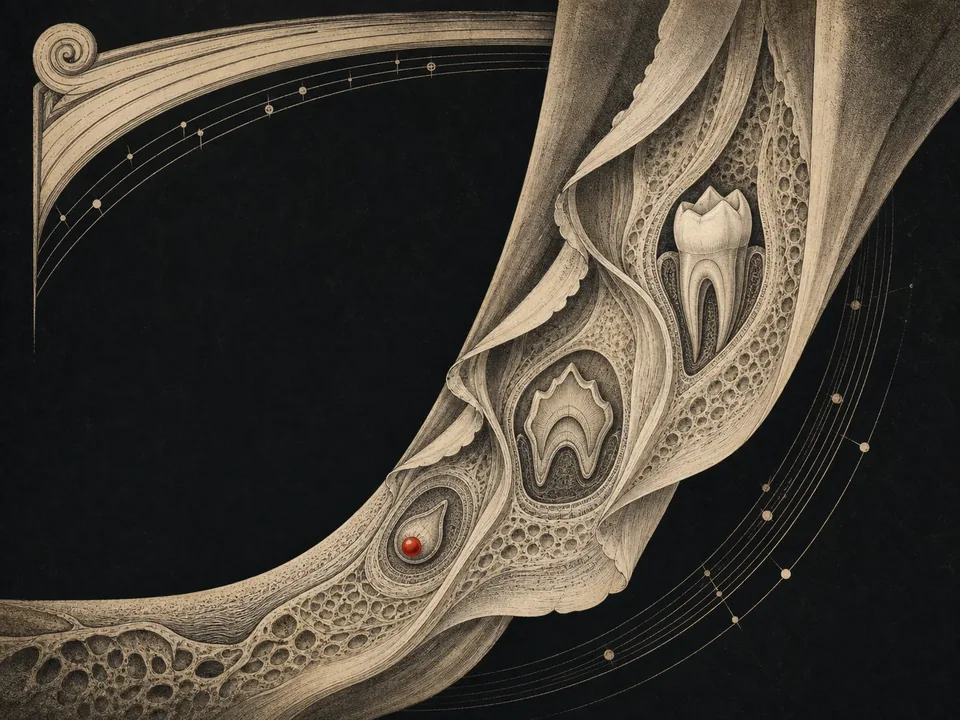
Sepia lithograph showing a tooth bud, cap stage, and mature tooth rising through jaw tissue along curved engraved score lines
Plate IA crown alone is not a tooth. Enamel, dentin, pulp, cementum, and ligament all have to form in the right sequence. That is the bar every regeneration program has to clear.

Analysis

Latest analysis

Trial update

What the TRG-035 Phase I record actually establishes

July 28, 2026 · Kitano Hospital (2024), trial announcement; Toregem BioPharma (2026), financing disclosure

The Phase I record shows a single ascending dose tolerated in adults. It says nothing about growing teeth in anyone, and the Phase II population is children with congenital agenesis, not adults.

Literature

Mandibular tooth agenesis runs with cleft lip and palate, not cleft lip alone

July 27, 2026 · Wolswijk et al. (2026), The Cleft Palate Craniofacial Journal

In a case-control radiograph study, mandibular tooth agenesis affected 10.3% of a nonsyndromic cleft cohort versus 4.9% of controls, concentrated in cleft palate and cleft lip and palate, and in the second premolar.

All analysis →